
Practical Limits for Safer Slot Sessions in Canada

Trying a slot with virtual credits can help you understand its pace before deciding whether it suits your budget. The sweet bonanza demo may be useful for learning the tumble format, locating the information panel and noticing how quickly several spins can pass. A demo cannot predict future results or make real-money play risk-free, however. The most useful preparation is to combine basic game familiarisation with clear spending, time and stopping rules.
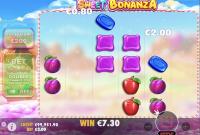
What a demo can—and cannot—tell you
A free-demo mode normally uses virtual credits rather than money that can be withdrawn. That makes it a low-pressure way to identify the spin controls, stake selector, sound settings, game history and information screen. You can also observe how winning symbols disappear, how replacement symbols fall into place and how one paid spin may contain several tumble sequences.
This practice is valuable because unfamiliar features can encourage impulsive decisions. Learning what the Scatter symbol looks like, where the Free Spins rules are displayed and how autoplay controls work may reduce confusion later. It is sensible to practise manually first, particularly if autoplay is available, so you understand what the game is doing before considering any automatic setting.
Demo results do not establish that a game is profitable, “due” for a win or likely to repeat a particular pattern. Short sessions are too small to measure return to player, volatility or feature frequency. A demo also does not show whether an operator uses the same configuration, stake range or rules in real-money play. Treat it as an orientation tool, not a forecast or a test of earning potential.
Choose a budget before opening a real-money session
A practical gambling budget should be money reserved for entertainment after essential costs, savings and existing commitments have been covered. It should not come from rent, food, bill payments, credit intended for necessities or money needed by someone else. Decide the amount before playing, and regard it as spent once it enters the gambling account, even if the balance temporarily rises.

Break the overall amount into a session allowance. For example, a monthly entertainment budget can be divided into smaller weekly or occasional amounts, leaving room for ordinary expenses and unexpected costs. Avoid increasing the allowance because a previous session lost money. Chasing attempts to recover losses can turn a defined leisure expense into an uncontrolled one.
Stake size should fit the session budget rather than being selected because a larger amount makes wins look more exciting. A useful calculation is simple: divide the available session amount by the maximum number of spins you are prepared to make, then choose a stake that leaves a margin. This is not a guarantee that the budget will last, since feature results and tumble lengths vary, but it creates a deliberate ceiling.
Set stopping rules for time and money
Money limits work best when paired with time limits. Before starting, choose a finishing time and set an alarm away from the device. Include time for breaks rather than treating the alarm as a suggestion. Long sessions can make losses feel less significant and can encourage decisions based on tiredness, frustration or excitement instead of the plan made beforehand.
Use separate stopping points for different outcomes. Stop when the session budget is gone, even if you feel a win is about to arrive. Consider also stopping after reaching a personal profit target, since returning winnings to the game can gradually remove the result you intended to keep. A win target is not a promise of profit; it is simply a pre-set point for ending a session.
Operator-level controls may include deposit limits, loss limits, session reminders, cooling-off periods and self-exclusion. Availability and names can differ by operator and by the rules applying in the player’s province. Read the settings before depositing, and check whether a limit takes effect immediately or only after a waiting period. If controls are difficult to find, contact the operator rather than assuming they exist.
Check the rules without confusing features with safeguards
The game information screen should be checked before real-money play. It can show the applicable RTP, qualifying symbol combinations, Scatter rules, Free Spins details, multiplier behaviour, bet range and maximum-win information for the loaded configuration. Those details may differ between operators, so general figures found elsewhere should not replace the rules displayed in the actual game.
Features such as an Ante Bet, Bonus Buy or autoplay are game options, not responsible-gambling protections. An Ante Bet can increase the cost of each spin, while a Bonus Buy can require a large multiple of the selected base bet where permitted. Autoplay can continue while attention is elsewhere. If an option makes it harder to notice spending or time, leaving it unused may be the safer choice.
For broader Canadian information about gambling risks, support and safer-play principles, consult Canada’s responsible gambling information. It is also worth reading the selected operator’s terms for account controls, bonus conditions and withdrawal restrictions. Casino-level rules—not the slot itself—govern verification, account access, transaction records and the availability of responsible-gambling tools.
Recognise when a session should end
Warning signs are often behavioural rather than technical. These can include hiding play from family, repeatedly exceeding a planned amount, borrowing to continue, missing work or sleep, feeling unusually irritable when stopping, or thinking mainly about recovering losses. One sign does not diagnose a gambling problem, but it is a reason to pause rather than increase stakes.
A cooling-off period can be useful when emotions are running high. Close the game, move away from the device, record what was deposited and spent, and avoid making a new gambling decision until the planned break has ended. Removing saved payment details and disabling promotional messages may create additional distance. Do not treat a temporary win as evidence that the concerns have disappeared.
If gambling is affecting finances, relationships, health or daily responsibilities, seek confidential support from an appropriate Canadian service or a local health professional. A casino’s self-exclusion feature may help block access, but it is not a substitute for broader support. Friends or relatives can also help by providing accountability, provided the conversation is respectful and focused on safety rather than blame.
Questions Canadian players often ask
Does demo play prove that the slot is fair?
No. Demo play can show the interface and illustrate the stated mechanics, but a short sample cannot verify RTP, volatility, feature frequency or future results. Check the information screen for the specific operator’s configuration and remember that virtual-credit outcomes do not guarantee equivalent real-money results.
Are deposit limits part of the slot?
No. Deposit limits, loss limits, cooling-off periods and self-exclusion are controlled by the casino account or another applicable service. Their availability, activation timing and maximum values can vary. Review the operator’s responsible-gambling menu and terms before funding an account.
What should I do if I keep chasing losses?
Stop the session and avoid adding funds to recover what was lost. Use available cooling-off or self-exclusion controls, tell someone you trust and seek confidential gambling support or healthcare advice. Chasing losses is a warning sign, not a strategy for restoring a budget.